Tiger Shark Catch at Night in Sanibel FL
Tiger Shark Night Fishing in Sanibel - What to Expect

Fishing Charter by Captain Christopher Vester in September
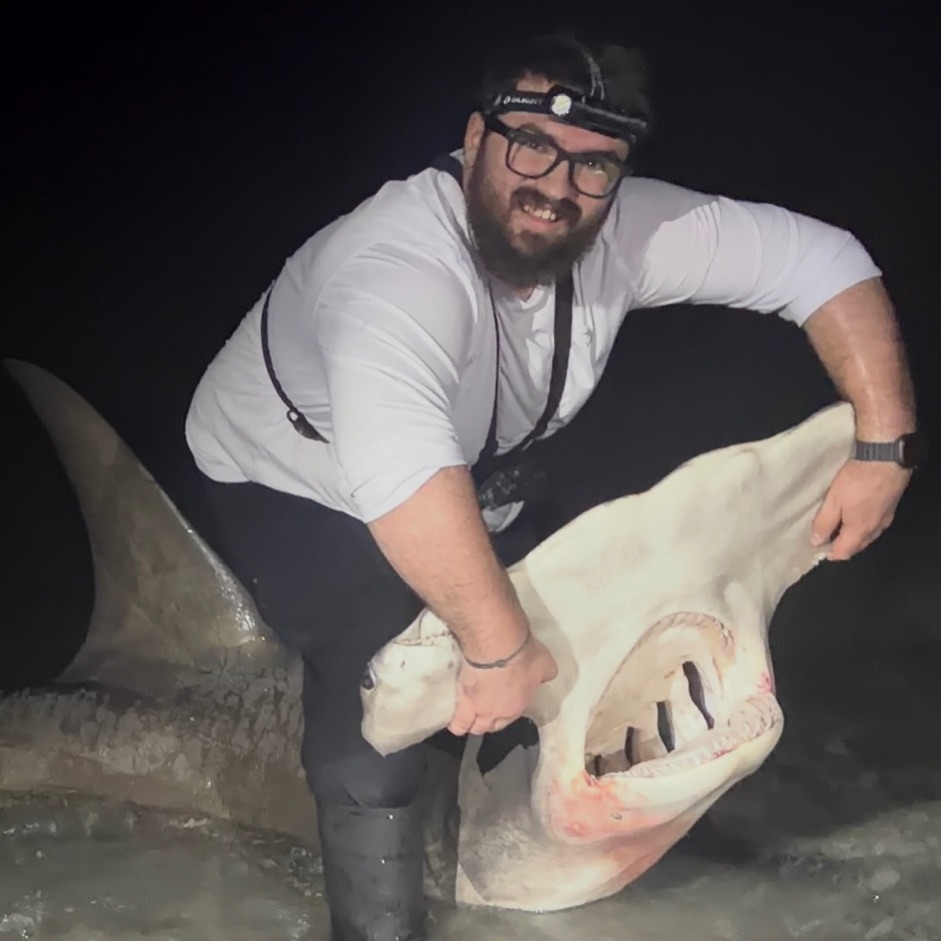
- Land based Shark Fishing in Sanibel FL


Summary
Join a fishing charter in Sanibel on Saturday, September 26 for an adrenaline-fueled night hunt targeting tiger sharks. Captain Christopher Vester of Lee County Land Based Shark Fishing delivers an intense, headlamp-lit offshore experience packed with action and unforgettable moments in Florida's prime shark waters.
Shark Fishing with Captain Christopher Vester - Rates & Booking
Captain Christopher Vester of Lee County Land Based Shark Fishing delivers a high-octane night shark fishing charter in Sanibel waters on Saturday, September 26. This specialized fishing charter puts anglers directly on the action with targeted tiger shark encounters under headlamp illumination - a thrilling departure from traditional daytime fishing. Whether you're after your first shark or chasing trophy-class tigers, this charter combines precision targeting with raw excitement. Contact Lee County Land Based Shark Fishing to lock in your spot and get rate details for this premium offshore experience.
Highlights of Night Shark Fishing
Night shark fishing unleashes an entirely different energy than traditional daytime fishing. As darkness falls over Sanibel's waters, predatory activity intensifies, and tiger sharks become more aggressive and bold. The headlamp setup cuts through the dark, creating a spotlight effect that amplifies the intensity of every strike and battle. You'll experience the raw power of these apex predators in their element, with the tension of not knowing exactly what lurks just beneath the surface until the moment it hits your line. This is shark fishing at its most visceral - fast-paced, unpredictable, and absolutely electrifying.
Sanibel's offshore environment creates ideal conditions for tiger shark hunting. The deeper channels and current-rich waters attract these powerful hunters throughout the year, but night sessions unlock peak feeding windows when sharks are most responsive and aggressive. Every cast, every retrieve, every moment on deck delivers genuine adrenaline-fueled action.
Local Species Insights: Tiger Sharks
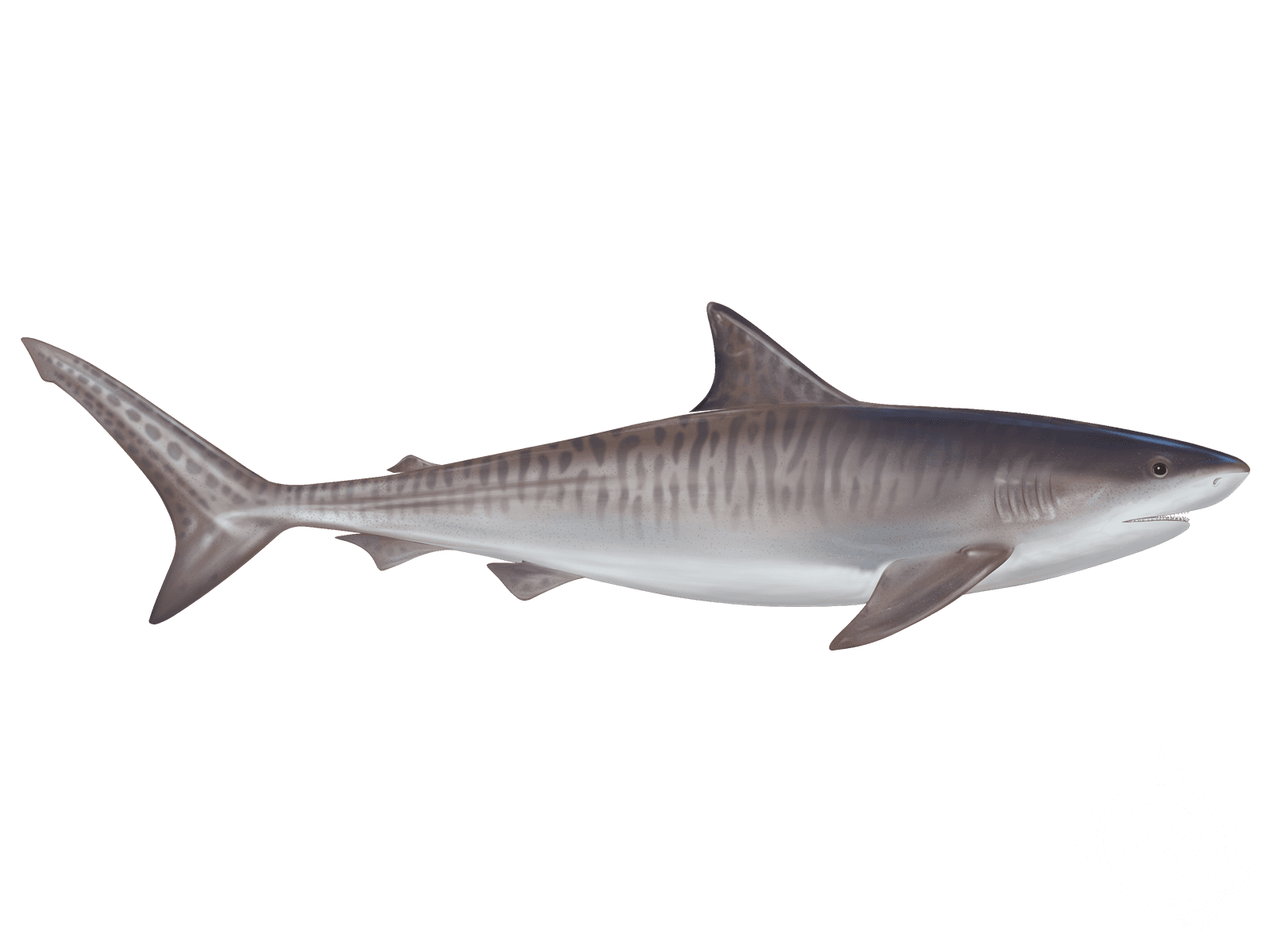
Tiger sharks rank among Florida's most formidable predators, and Sanibel waters hold some of the Gulf's most active populations. These sleek, powerful fish can exceed 15 feet and possess incredible speed and aggression. Tiger sharks get their name from the distinctive vertical bars that stripe their sides - markings that fade with age but remain iconic. They're apex hunters, voracious feeders with a reputation for unpredictability and raw power that makes every encounter electric.
What makes tiger shark fishing so intense is their behavior. Unlike some shark species, tigers actively hunt at night, patrolling shallow and mid-depth waters with relentless intensity. They respond aggressively to chum and bait, and once they commit to a strike, the fight becomes immediate and brutal. Their power transfers directly through the rod and into your arms - you feel every ounce of their strength and aggression. Sanibel's location along the Gulf provides consistent year-round tiger shark populations, making it one of Florida's premier destinations for this specific challenge.
Night fishing amplifies the tiger shark experience. As darkness descends, these predators transition into peak feeding mode. The reduced visibility actually makes them more aggressive - they rely on other senses and strike with less hesitation. From the angler's perspective, this creates faster action, more takes, and shorter wait times between strikes. The headlamp illumination adds visual drama to an already intense battle, letting you track the shark's movements and power in real time as it tears toward the boat.
Captain Christopher Vester's expertise in tiger shark behavior transforms this from a random fishing trip into a calculated, strategic hunt. His knowledge of local waters, seasonal patterns, and night-feeding activity puts you in position for consistent action. Experience the thrill of night shark fishing in one of the Gulf's most shark-rich environments.
Fishing in Sanibel: Tiger Shark
Tiger Shark Overview
The Tiger Shark (Galeocerdo Cuvier) is one of the ocean's most iconic and formidable predators, belonging to the family Carcharhinidae within the order Carcharhiniformes. Named for the distinctive dark bands or stripes that stripe its body like a terrestrial tiger, this apex hunter captivates anglers and ocean enthusiasts alike. These remarkable creatures are the largest members of their family and are known for their bold feeding behavior, incredible speed bursts, and mysterious migratory patterns. What makes the Tiger Shark truly special is its combination of patient stalking and explosive power—a solitary nomadic wanderer that patrols tropical and subtropical waters with electroreceptive precision. From the warm currents off Florida to the reefs of the Caribbean, encountering a Tiger Shark is an unforgettable experience that speaks to the raw power and beauty of marine ecosystems.
Tiger Shark Habitat and Distribution
Tiger Sharks thrive in coastal waters throughout tropical and subtropical regions, typically found in depths averaging around 1,000 feet but capable of venturing into surprisingly shallow water as little as 10 feet deep when hunting prey. These nomadic predators follow warm-water currents and remain close to the equator during winter months, making them most abundant in predictable geographic zones. The range of Tiger Sharks extends from Cape Cod, Massachusetts, down along Florida's coasts and around the Gulf of Mexico, creating a rich hunting ground along the entire southeastern seaboard. On the western coast, populations are distributed from central California south through Mexico. Tiger Sharks are commonly encountered around deeper waters and reefs but will boldly venture into shallow waters to feed, making them accessible to both offshore and nearshore anglers. Wreck sites and reef structures serve as prime habitat, drawing consistent populations throughout the year in warmer months.
Tiger Shark Size and Weight
Tiger Sharks are impressively large predators, with typical adult specimens reaching 11 to 14 feet in length and weighing between 800 to 1,400 pounds. However, these measurements represent only the average—the true giants of the species are the females, which grow considerably larger than males due to sexual dimorphism. Large female Tiger Sharks can reach exceptional sizes around 16 to 17 feet in length and tip the scales at up to 2,000 pounds, with records documenting individuals exceeding 3,000 pounds. The size difference between sexes is dramatic and noteworthy for anglers; a 295-inch specimen represents an extraordinary catch and exemplifies the upper range of what modern fisheries have documented. Smaller males rarely exceed 14 feet, making female Tiger Sharks the true titans of this species.
Tiger Shark Diet and Behavior
Tiger Sharks are apex predators and opportunistic feeders with a remarkably diverse and voracious diet. They consume fish, crustaceans, cephalopods, sea turtles, marine mammals, and even other sharks, earning their reputation as one of the ocean's most aggressive hunters. Their hunting strategy is deceptively patient—they use their sophisticated countershading camouflage (dark blue to light green tops blending with deep water, light bellies blending against surface light) to approach prey undetected. When the moment strikes, they unleash explosive bursts of speed and are among the strongest swimming sharks in the Carcharhinidae family. Tiger Sharks possess small electroreceptive pits along their snout that detect electrical fields and impulses generated by prey animals, giving them a sophisticated sensory advantage in murky or deep waters. As solitary, nomadic hunters, they don't school or display social behaviors, preferring to roam independently in search of feeding opportunities. Interestingly, the tiger stripes that give the species its name fade with age, making older individuals appear more uniformly colored.
Tiger Shark Spawning or Seasonal Activity
Tiger Sharks are ovoviviparous, meaning they develop eggs internally and give birth to live young rather than laying eggs. Seasonal activity is heavily influenced by water temperature, with Tiger Sharks migrating toward equatorial waters during winter months to follow warm currents and maintain optimal body temperature. During warmer months (spring through fall), populations expand into more temperate and subtropical zones, making this the prime season for angler encounters along the southeastern U.S. coast. Their nomadic nature means they are constantly on the move, following prey migrations and temperature gradients. Breeding occurs in warm tropical and subtropical waters, typically during warmer months, though the exact timing and locations of Tiger Shark nurseries remain topics of active marine research. The species' migratory patterns make seasonal awareness crucial for fishing success.
Tiger Shark Techniques for Observation or Capture
Live Bait and Chunming Method: This is the predominant and most effective technique for targeting Tiger Sharks. Anglers should use live bait such as mackerel, bluefish, or mullet, or cut bait featuring mackerel, bluefish, or tuna filets. The strategy involves chumming the water with ground fish and bloody water to create an attractive scent corridor, then presenting live bait on heavy-gauge tackle. Rods must feature 100-pound test monofilament with hooks ranging from 6/0 to 10/0. Heavy equipment is non-negotiable—reels, rods, line, and leaders must all be constructed for extreme loads. Set up in nearshore or offshore depths (50-200 feet initially) near reef structures or known hunting grounds.
Trolling Method: Successful anglers also employ trolling techniques, towing large baitfish or live mullet behind moving boats at speeds of 3-5 knots. This method covers more water and can be effective in both nearshore and offshore environments. Trolling works particularly well during dawn and dusk when Tiger Sharks are most actively hunting.
Wreck and Reef Fishing: Tiger Sharks frequent wreck sites and reef structures where prey congregates. Position your boat around these structures and use the live bait/chumming technique. Around South Florida and the Keys, famous wreck sites and reef systems like those off Miami and the Marquesas Keys are legendary Tiger Shark hotspots. Fish deeper wreck sides (100-300 feet) during daylight hours and shallower structures (50-100 feet) during night hours when these nocturnal hunters move shallower to feed.
Tiger Shark Culinary or Utilization Notes
Tiger Sharks are generally considered poor table fare and are not targeted primarily for consumption in most regions. While technically edible, their meat has poor culinary quality, often developing an unpleasant ammonia smell due to urea accumulation in their tissues. From a culinary perspective, Tiger Sharks rank as a 'poor odds' species for food quality. Most modern catch-and-release fishing practices focus on sport and conservation rather than consumption. Some commercial fisheries do utilize Tiger Shark meat for low-grade applications, but recreational anglers rarely keep them for eating. The species is valued almost exclusively for the sporting challenge they present—their size, power, and fighting ability make them legendary game fish rather than prized dinner fare.
Tiger Shark Frequently Asked Questions
Q: What is the best bait for catching a Tiger Shark?
A: Live bait is the most effective choice, with mackerel, bluefish, and mullet ranking among the top options. Cut bait featuring mackerel or tuna filets also works well. The key is using fresh, oily baitfish that create a strong scent corridor in the water, combined with aggressive chumming to attract these predators from distance.
Q: Where can I find Tiger Sharks near South Florida?
A: Tiger Sharks are commonly found throughout South Florida's offshore and nearshore waters, particularly around reef structures, wreck sites, and deeper channels. Areas like the Marquesas Keys, offshore Miami reefs, and the Gulf of Mexico coastal waters are prime Tiger Shark territory, especially during warmer months from spring through fall.
Q: Is the Tiger Shark good to eat?
A: Tiger Sharks are generally considered poor table fare with low culinary value. The meat often develops an unpleasant ammonia smell due to their physiology and is not recommended for consumption. Most anglers practice catch-and-release, valuing these sharks for sport rather than food.
Q: When is the best time to catch a Tiger Shark?
A: The prime season for Tiger Shark fishing runs from spring through fall, when warm water temperatures bring populations into nearshore and offshore zones. Winter months see migrations toward equatorial waters. Within each day, dawn and dusk typically offer the best action, as Tiger Sharks are more actively hunting during low-light periods.
Q: What equipment do I need for Tiger Shark fishing?
A: Heavy tackle is absolutely essential. Use a sturdy rod and reel rated for at least 100-pound test monofilament, with hooks ranging from 6/0 to 10/0. Heavy-gauge leaders, quality reels with strong drag systems, and robust rod construction are non-negotiable. These powerful predators demand professional-grade equipment.
Q: Are Tiger Sharks dangerous to humans?
A: Tiger Sharks deserve respect as apex predators. While unprovoked attacks are rare, their aggressive feeding behavior and large teeth make them potentially dangerous. Never swim in waters where Tiger Sharks are known to be present, and always practice caution and respect when handling or fishing for this species in the field.